The Axolotl Genome: Inside One of the Largest Animal Genomes Ever Mapped
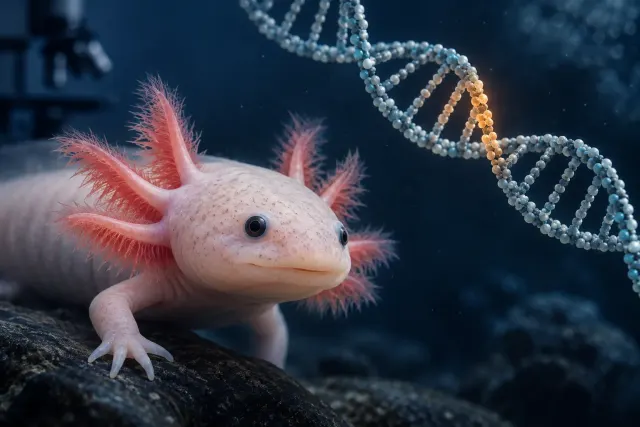
In 2018, researchers announced they had fully sequenced the axolotl genome — and the number that came out of it startled a lot of biologists. At roughly 32 billion base pairs, it’s about ten times larger than the human genome, and it was, at the time, the largest animal genome ever sequenced.
Quick answer
The axolotl genome, sequenced in 2018, is about 32 billion base pairs — roughly ten times the human genome and at the time the largest animal genome ever assembled. Most of the extra size is repetitive DNA rather than extra genes; understanding what that repetitive DNA does is an active research question tied to regeneration.
- ~32 billion base pairs vs ~3 billion in humans
- Sequenced 2018 with long-read technology
- Gene count is not ten times higher — the difference is mostly repetitive sequence
- Enables targeted studies such as CRISPR knock-outs
What a Genome Actually Is
A genome is the complete set of genetic instructions encoded in an organism’s DNA. Its size is usually measured in base pairs — the individual chemical “letters” that make up the DNA sequence. Humans have around 3 billion base pairs. Axolotls have roughly ten times that amount, despite being, biologically speaking, a far simpler animal in most other respects.
Why It’s So Big
A larger genome doesn’t necessarily mean more genes — much of the axolotl genome is made up of repetitive genetic sequences that don’t directly code for proteins. Scientists are still working out exactly why species capable of extensive regeneration, axolotls included, tend to carry unusually large amounts of this repetitive genetic material. One leading area of interest is whether some of these repetitive sequences play a regulatory role — switching other genes on or off — rather than being purely inactive “junk.”
Why It Took So Long to Sequence
Genome size isn’t the only obstacle; repetitive sequences are notoriously difficult to assemble correctly, since standard sequencing methods struggle to tell one repeated stretch of DNA apart from another. It took specialised long-read sequencing technology and years of computational work to piece together a genome as large and repetitive as the axolotl’s.
What Having the Genome Mapped Actually Enables
Before 2018, researchers studying axolotl regeneration were largely working from observation — watching what happened during regrowth without a clear map of the underlying genetics. A fully sequenced genome changes that: it lets researchers identify specific genes activated during blastema formation (see Why Axolotls Can Regrow Limbs), and it’s the essential reference map behind newer research techniques like CRISPR gene editing in axolotls.
Frequently Asked Questions
Is the axolotl genome the largest ever sequenced?
It was the largest animal genome sequenced at the time of its 2018 publication; some other species with even larger genomes have since been sequenced, but axolotls remain a notable outlier.
Does a bigger genome mean axolotls have more genes than humans?
No — genome size and gene count aren’t directly proportional. Much of the extra size comes from repetitive, non-coding sequences rather than additional genes.
Why does genome size matter for regeneration research?
Having a fully mapped genome lets researchers pinpoint exactly which genes activate during regeneration, rather than studying the process without a genetic reference point.