Different Types of Axolotls: Morphs and Colour
The colour of an Axolotl variation is dependent upon pigment cells called chromatophores. These cells are melanophores (containing eumelanin, a black-brown pigment), xanthophores (containing carotenoids and pteridines, yellow and reddish pigments) and iridophores (containing crystallised purines, which impart a shiny iridescence). Most times people will refer to colours as morphs. Here is every morph you’re likely to come across, from the common to the vanishingly rare — with a photo gallery of each at the end of the article.
Leucistic
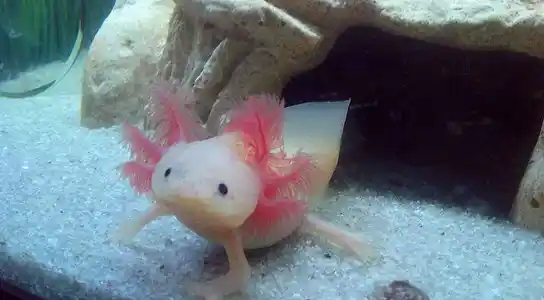
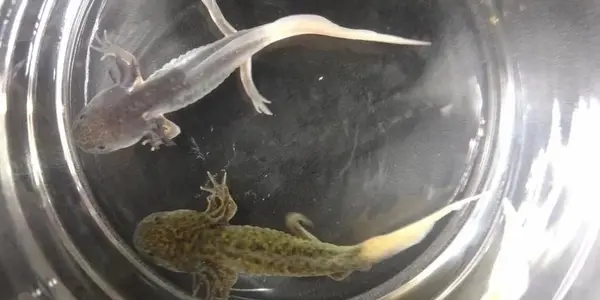
A leucistic axolotl is a unique and visually striking type of axolotl. They are predominantly white or pale pink in colour. This appearance is due to leucism, a condition characterised by reduced pigmentation. Their eyes are usually black or dark navy, which is one of the key features distinguishing them from albinos. They have feathery, external gills that are often bright red or pink due to the visibility of blood vessels beneath their translucent skin. These axolotls may or may not develop freckles depending on the environment and genetics.
Wild Type
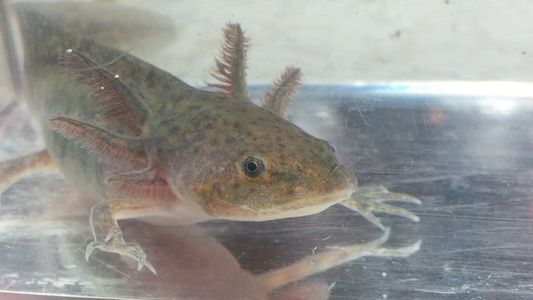
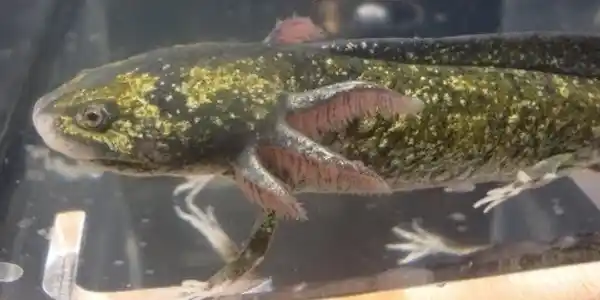
A Wild Type axolotl, reflecting the natural colouration found in the species’ native habitat, has distinct features. The primary colour is a dark, mottled brown, often with shades of green, tan, or olive. This colouring provides camouflage in their natural environment. Often they contain speckles of shiny gold known as iridophore pigment. The eyes are usually dark with a metallic gold ring around the pupil, which differentiates them from leucistic, melanoid, or albino axolotls. The external gills are typically the same dark colour as the body or slightly lighter, with feathery tips that can be red or pink, indicating blood flow.
White Albino
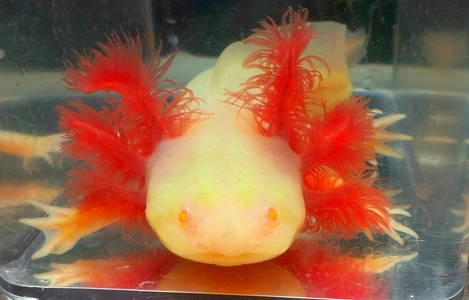
A White Albino axolotl is a fascinating and distinctive variety of axolotl, characterised by its unique colouration and features due to albinism. They are predominantly white or very pale pink. This appearance is due to albinism, a genetic condition that results in a lack of melanin, the pigment that normally provides colour to the skin. One of the most notable features of an albino axolotl is its eyes, which are usually red or clear — the lack of pigment in the iris allows the blood vessels of the retina to be visible. The gills are often the same pale colour as the body, with feathery, bright red or pink filaments due to the visibility of blood vessels under their translucent skin. The white albino comes in two forms, known only as white and xanthic; for simplicity, most keepers just call them white albinos.
Golden Albino
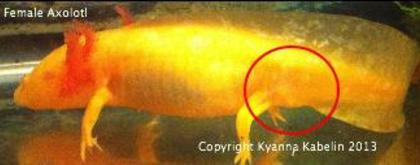
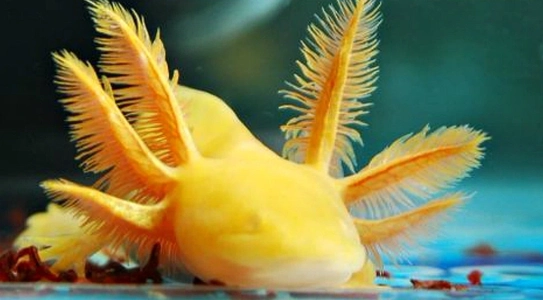
A Golden Albino axolotl is a captivating variant of the axolotl, known for its distinctive and attractive appearance. It exhibits a luminous golden-yellow to light tan colour. The golden colouration is due to the presence of yellow pigments, combined with the absence of darker pigments typically inhibited by albinism. Like other albino creatures, Golden Albino axolotls have characteristic red or clear eyes — the lack of pigment in the iris means the blood vessels in the retina are visible, giving the eyes their distinctive colouration. Their gills are usually a matching golden or pinkish hue, with feathery gill stalks that may be tipped with a brighter colour, often appearing reddish or peachy due to the blood vessels.
Melanoid
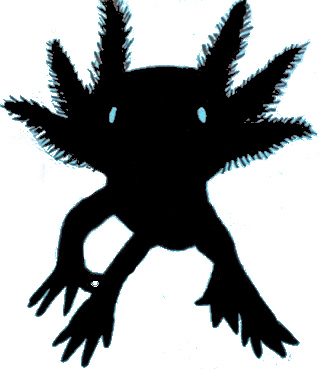
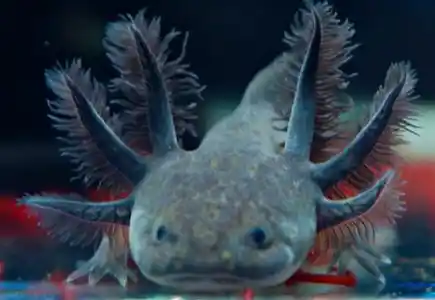
A Melanoid axolotl is a unique morph, distinguishable by its specific pigmentation characteristics. Melanoid axolotls are characterised by their dark, uniform colouration. Unlike Wild Type axolotls, melanoids lack iridophores, the cells responsible for reflective pigments. As a result, their colour appears matte and is typically a solid black or very dark grey, without the shiny or speckled appearance seen in other axolotl morphs. Their eyes are generally black or very dark, lacking the shiny gold ring around the pupil present in Wild Type axolotls. The gills are typically the same dark colour as the body, with the feathery filaments often appearing more subdued compared to brighter-coloured morphs. This is, simply put, a black axolotl.
GFP Axolotls
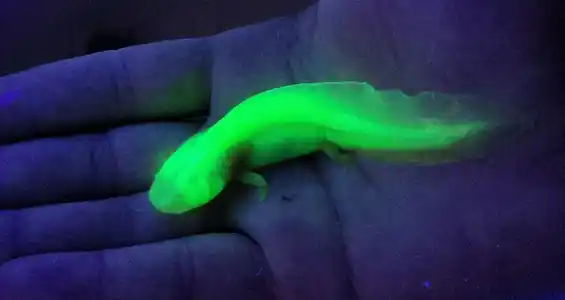
GFP stands for Green Fluorescent Protein — a remarkable variant of axolotl that has been genetically modified to express a fluorescent protein, giving them a unique appearance under certain lighting conditions. This genetic trait is passed down from generation to generation and can be bred into any morph of axolotl. Under normal lighting, GFP axolotls look similar to other axolotl morphs and come in various colours such as wild type, leucistic, albino, or melanoid — the GFP gene doesn’t typically affect base colouration. The defining feature of GFP axolotls is their ability to glow a bright green colour when exposed to ultraviolet (UV) or blue light. Fun fact: this fluorescence is due to the expression of the Green Fluorescent Protein, originally derived from jellyfish. Their eyes and gills are similar to their base morph (for example, a GFP Leucistic would have dark eyes and pale gills), but the pupils will glow emerald green and the gills may also fluoresce under UV or blue light.
Copper
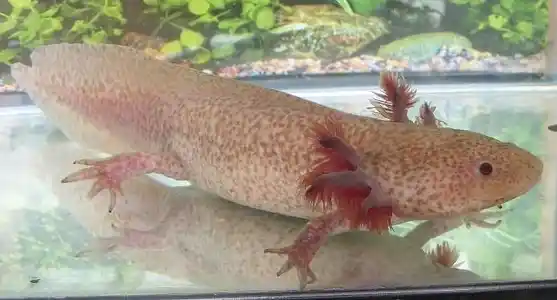
A Copper axolotl is a distinct and visually striking morph, known for its unique colouration. Copper is a variety of albinism, as they have red-tinted eyes and lay white eggs. The Copper axolotl exhibits a copper or light brownish-orange colour, which can range from pale to more intense shades. The copper colour is due to a specific genetic mutation affecting pigmentation. The gills are often the same colour as the body or slightly lighter, feathery, and may have a pinkish hue due to visible blood vessels.
Chimera
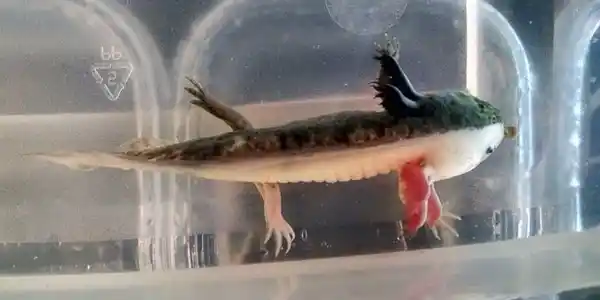
A Chimera axolotl is an extremely rare and fascinating morph, resulting from a unique genetic event. The most striking feature of a Chimera axolotl is its bilateral symmetry in colouration — one side of its body can be a completely different colour from the other side. For example, one side might be white (like a leucistic morph) while the other side is black (like a melanoid morph). Chimerism in axolotls is said to happen when two eggs fuse together during embryonic development, and each side grows according to the egg it originated from, often resulting in a split-down-the-middle appearance — though sometimes, if the two eggs that fused are the same morph, you may never even notice it. One side can often grow at a slightly slower rate than the other. The eyes and gills of a Chimera axolotl can also reflect this dual colouration, with each side potentially exhibiting characteristics of a different morph.
Silver Dalmatian / Lavender
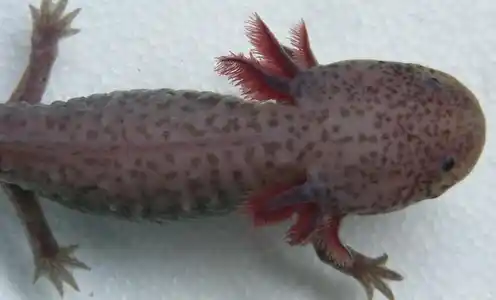
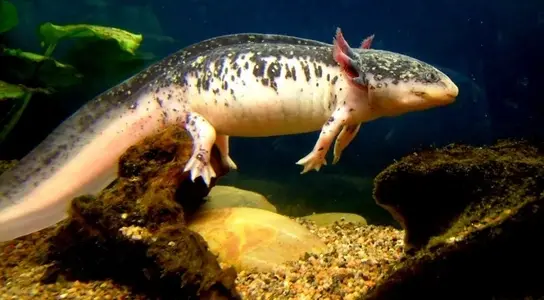
A Silver Dalmatian, also known as a Lavender axolotl, is a particularly striking morph characterised by its unique colouration and patterning. The primary colour is usually a pale, silvery lavender — a result of a specific combination of genetic traits. True to the “Dalmatian” name, these axolotls are known for their dark spots or speckles, which can vary in size and density but are typically black or dark grey, providing a stark contrast to the lighter base colour. The eyes are usually dark, contrasting with the lighter body colour. Their gills are often the same colour as their body, with feathery filaments that may be tipped in a darker colour, appearing particularly striking against the pale background of the axolotl’s body.
Enigma
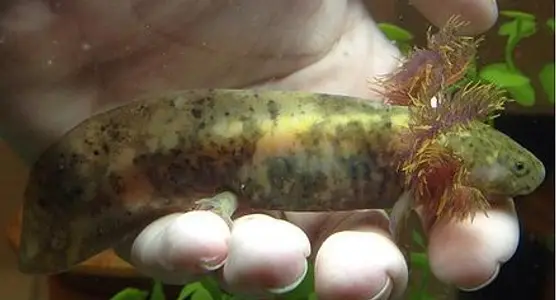
The Enigma axolotl displays a mix of different colours and patterns across its body. Unlike other axolotl morphs with more consistent colouration, Enigmas can show a variety of colours including black, white, gold, grey, and even patches of other colours. The patterning is typically irregular and can include spots, patches, stripes, or other markings — usually random and varying greatly from one individual to another, making each Enigma axolotl unique. The eyes may match the surrounding skin colouration or have a distinct colour of their own. The gills often reflect the diverse colouration of the body: feathery, and sometimes multi-coloured.
Mosaic
The mosaic pattern in axolotls is the result of chimerism or genetic mosaicism, where an individual is composed of cells with different genetic makeups — this can occur naturally or be induced in a laboratory setting. The most striking feature of a Mosaic axolotl is its varied colouration: unlike morphs with more uniform colours, mosaics display a mix of different colours and patterns across their bodies, including patches of black, white, gold, and other colours. These patterns are irregular and random, much like the tiles in a mosaic artwork, and unique to each individual. The eyes can also reflect this diversity, often matching the surrounding skin or displaying a unique colour themselves. The gills often exhibit the same diverse colouration as the body, with feathery, sometimes multi-coloured filaments.
Piebald
The defining feature of a Piebald axolotl is its irregular pattern of pigmentation. This morph typically displays large patches of unpigmented areas, usually white or pink, mixed with pigmented sections in various colours such as black, grey, or even golden, depending on the axolotl’s genetic makeup. The pigmentation is randomly distributed, resulting in a pattern unique to each individual — unpigmented areas lack melanin and appear pale, while pigmented sections appear in stark contrast. Piebald axolotls have pigmentation that runs down the body and sides; many heavily-spotted leucistics are mistaken for piebald, but a true piebald is normally significantly darker and thicker in black spots than a spotty leucistic.
FireFly
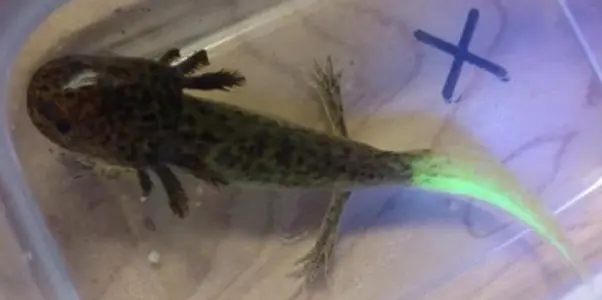
FireFly axolotls are literally one of a kind. They were produced by Lloyd Strohl II from Indiana, USA in 2016, via embryonic grafting, as part of a preliminary investigation into the distribution and activation of melanocytes in leucistic and mosaic axolotls. The FireFly axolotl is characterised by a dramatic contrast in colouration — typically a dark or black head and upper body, and a bright fluorescent green tail. This stark colour contrast resembles the appearance of a firefly, hence the name. The fluorescent green portion is designed to mimic bioluminescence (though it doesn’t actually glow in the dark on its own), usually achieved by incorporating GFP genes. Because of how they’re created, FireFly axolotls are quite rare and more of a novelty within the axolotl community.
Morph Gallery
Originally sourced from A Lot'l Axolotls.